
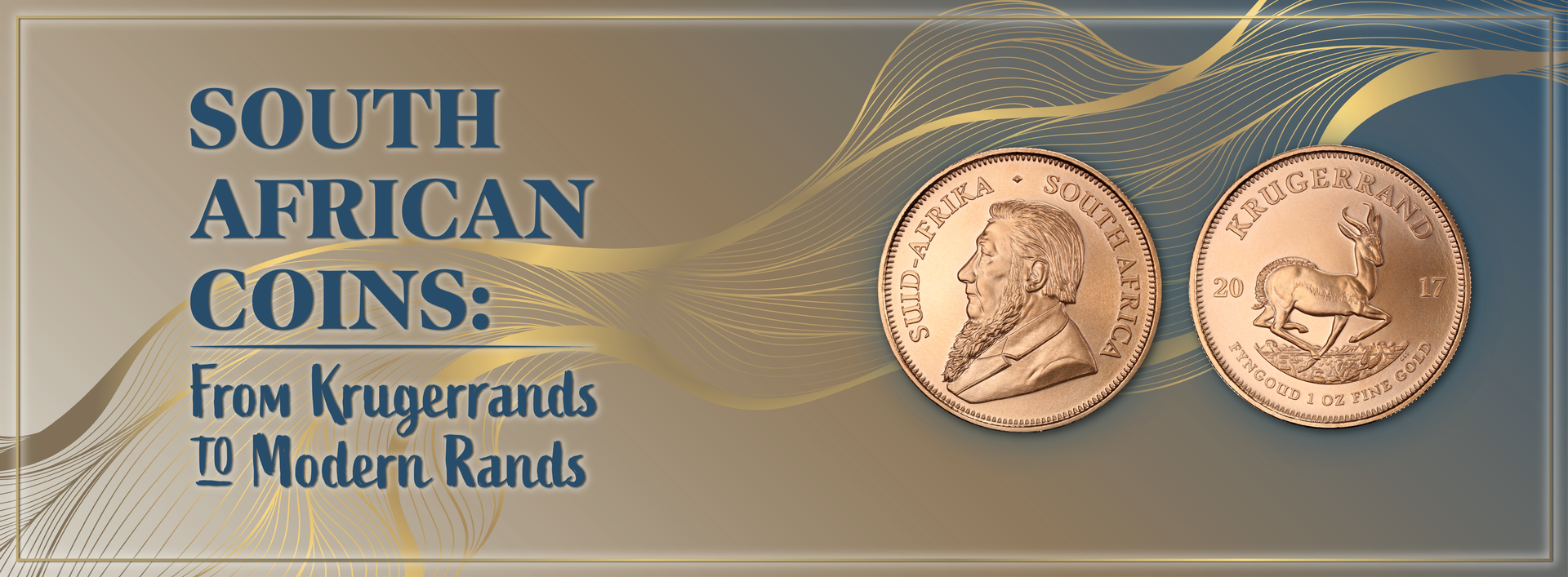
South Africa’s coinage story is often reduced to a single word: Krugerrand. That shorthand exists for a reason—the Krugerrand changed how the world thought about owning gold. But it also obscures a broader and more interesting picture. South African coinage didn’t stop evolving after 1967. It expanded.
This article traces that evolution—from a single-purpose trade coin to a layered mix of bullion, circulation, and modern collector issues—and explains how collectors approach South African coins today with clarity rather than nostalgia.
The Krugerrand: Built for the Real World
When the Krugerrand was introduced in 1967, it wasn’t designed to be admired. It was designed to be understood.
Each coin contained exactly one troy ounce of fine gold, clearly stated, with no face value to confuse the issue. The choice of 22-karat gold wasn’t a compromise—it was a practical decision. By alloying the gold with copper, the coin became tougher, more resistant to wear, and better suited to real handling than softer 24-karat pieces.
That design logic mattered. In a global market where trust in gold ownership depended on clarity and durability, the Krugerrand did exactly what it was supposed to do. It made gold ownership simple.
Decades later, those same decisions still define the coin’s appeal.
Why Krugerrands Still Trade So Easily
Krugerrands remain a staple in the global gold market because they behave predictably.
Collectors and investors rely on them for three reasons:
- Instant recognition. Dealers worldwide know the coin, its specs, and its market.
- Tight buy–sell spreads. Liquidity is strong, especially for common-date pieces.
- Durability. The copper alloy resists scratches and handling marks better than pure gold.
Krugerrands aren’t rare, and they aren’t decorative. They’re dependable. Many collectors keep them even as their collections expand, not because they’re exciting—but because they work.
Beyond the Krugerrand: Modern Rand Issues
South African coinage didn’t freeze in time with the Krugerrand.
In the years that followed, the South African Mint expanded into Rand-denominated bullion and commemorative issues, offering collectors more expressive designs and smaller production runs. These modern issues often feature:
- Wildlife motifs drawn from South Africa’s natural heritage
- Contemporary engraving styles
- Mintages lower than mass-market bullion programs
Not every modern Rand issue develops a premium, and collectors understand that. The appeal here isn’t guaranteed appreciation—it’s variety and identity. These coins give collectors a way to engage with South African coinage beyond the purely utilitarian.
How Collectors Approach South African Coins Today
Experienced collectors tend to approach South African coins in layers rather than categories.
A typical progression looks like this:
- Krugerrands as a gold foundation
- Select modern Rand issues for visual and thematic interest
- Occasional commemoratives that align with a broader collecting theme
The key is restraint. South Africa’s strength isn’t in chasing every release—it’s in choosing pieces that complement the rest of a collection.
Where South African Coins Fit in a Broader Strategy
South African coins bring a particular balance to a world-coin collection: function over flash.
They pair naturally with:
- Higher-purity bullion coins from other mints
- Design-driven modern series that lean more artistic
Collectors who appreciate coins that earned their reputation through use—not promotion—often find South African issues quietly satisfying. They don’t demand attention. They hold their place.