Our Top 5 Moments from the 2026 ANA World’s Fair of Money

Highlights from the 2026 ANA World’s Fair of Money in Pittsburgh, including rare coins, historic exhibits, and U.S. Mint releases.

There is a point at the ANA World’s Fair of Money when your definition of “rare” starts to shift. A legendary coin appears in one case, a major rarity sits a few tables away, a historic document is around the corner, and somewhere else on the bourse floor is treasure recovered from a shipwreck. That was Pittsburgh.


The 2026 ANA World’s Fair of Money brought together collectors, dealers, educators, major exhibits, new U.S. Mint releases, and some extraordinary pieces of American history. We spent the week taking photographs, talking with people throughout the hobby, attending presentations, and inevitably finding a few new numismatic rabbit holes to explore.


When it was over, we tried to narrow the experience down to five favorites. These were not necessarily the five rarest or most valuable things in the building. They were simply the five moments that made us stop, look a little longer, and keep talking about them after the show was over.


THE 1804 SILVER DOLLAR GOES GOLD


Our Number 5 made the list for a very simple reason: it was beautiful.


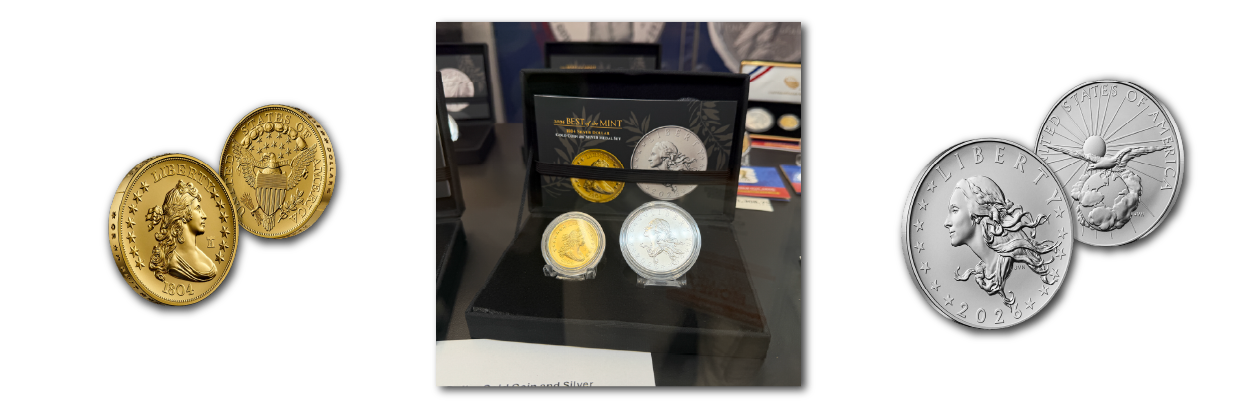
The U.S. Mint released the Best of the Mint 1804 Silver Dollar Gold Coin and Silver Medal Set during the show on August 27. The set reimagines one of the most famous designs in American numismatics as a one-ounce, 24-karat gold coin paired with a one-ounce silver medal. With a maximum mintage of 15,000 sets, it was one of the most visually striking new releases we saw in Pittsburgh.

2026 U.S. Mint Best of the Mint 1804 Silver Dollar Gold Coin and Silver Medal Set displayed at the ANA World’s Fair of Money.

There is also something wonderfully strange about seeing the words “1804 Silver Dollar” attached to a gold coin, although the history of the original 1804 dollar has never been particularly straightforward. Despite the date, the famous 1804 dollars collectors know today were not actually struck in 1804. The first examples were produced decades later for diplomatic presentation sets, helping create one of the great legends of American coin collecting.


For America’s 250th anniversary, the Mint took that famous design in an entirely different direction. Standing there looking at it in gold, we did not need a complicated reason to put it on the list. Sometimes collectors simply know when a piece looks good, and this one looked very good.


TWO VERSIONS OF THE DECLARATION OF INDEPENDENCE


One of the things we love most about numismatics is that coins make history tangible. At the ANA show, we experienced that same feeling through something other than coins.

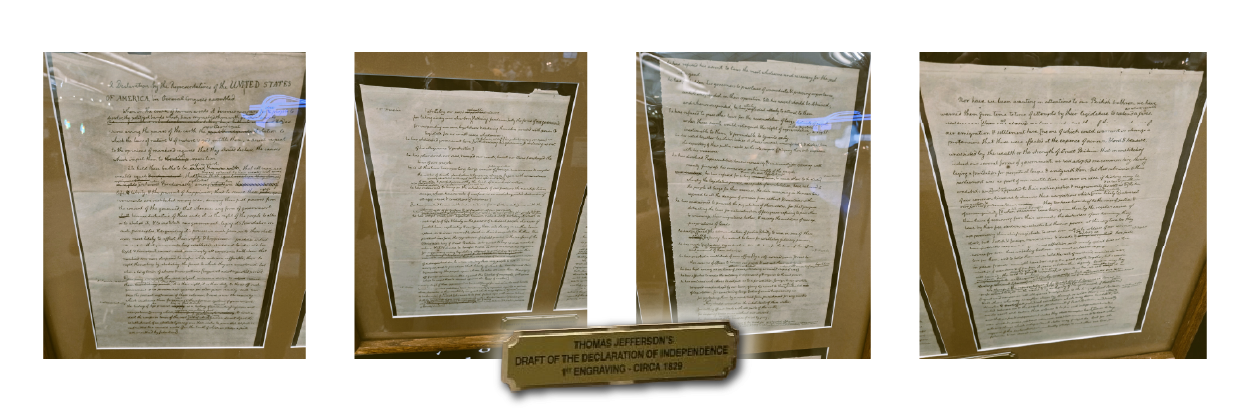
Two Versions of the Declaration of Independence exhibit at the 2026 ANA World’s Fair of Money, including Thomas Jefferson’s rough draft engraving.

The Two Versions of the Declaration of Independence exhibit brought together two remarkable historical documents. One was an 1848 Peter Force engraved copy of the Declaration of Independence, produced from the famous William J. Stone copperplate. Beside it was an engraved facsimile of Thomas Jefferson’s original rough draft, which represents the earliest surviving complete draft of the Declaration.

Seeing the two together was what made the display so memorable. We all know what the Declaration ultimately became, but the rough draft allows you to look backward at an earlier stage in the process and see the words and ideas before the document reached the form Americans recognize today.


For coin collectors, there was something especially fitting about seeing those documents at a major numismatic show during America’s 250th anniversary. We spend so much time studying presidents, wars, economic changes, westward expansion, legislation, and national milestones through the coins they left behind. This time, we were looking at words that helped shape the country that would eventually mint those coins.


GETTING OUR HANDS ON THE NEW 2026 TRUMP $1 COIN


Seeing a new coin before its general release is fun. Getting one in your hands is even better.


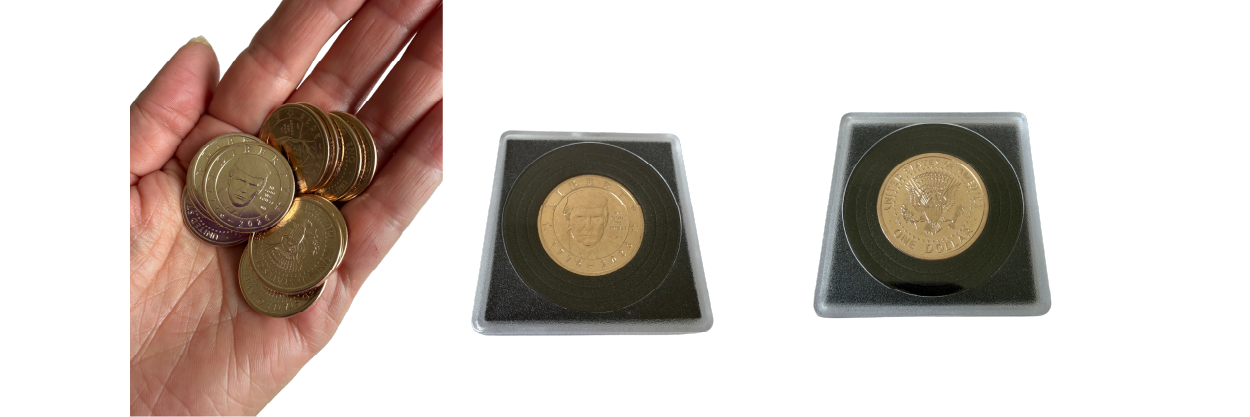
At the World’s Fair of Money, we were able to get advance-release examples of the new 2026 Semiquincentennial President Donald J. Trump $1 Coin. The coin is part of the U.S. Mint’s broader Semiquincentennial program marking America’s 250th anniversary and was available to us before the Mint’s general release of rolls and bags.

Advance-release 2026 Semiquincentennial President Donald J. Trump $1 coins obtained at the ANA World’s Fair of Money.

The obverse features President Donald J. Trump along with the inscriptions LIBERTY, IN GOD WE TRUST, and the dual date 1776–2026. The reverse features the Presidential Seal with a prominent 250 incorporated into the shield.


There is also already a treasure-hunt element for collectors. The Mint struck 250,000 examples at the Philadelphia Mint on July 4 carrying a special “July 4th” privy mark, with those pieces randomly mixed into Mint rolls and bags.


Whether modern coins are your primary collecting interest or not, there is something exciting about getting your hands on a brand-new U.S. coin before most collectors have had the chance to see one in person. That experience is what pushed this one into our Top 5.


AN ACTUAL GOLD BAR FROM THE S.S. CENTRAL AMERICA


Then there was the S.S. Central America exhibit, and this is where things started getting dangerous for us.


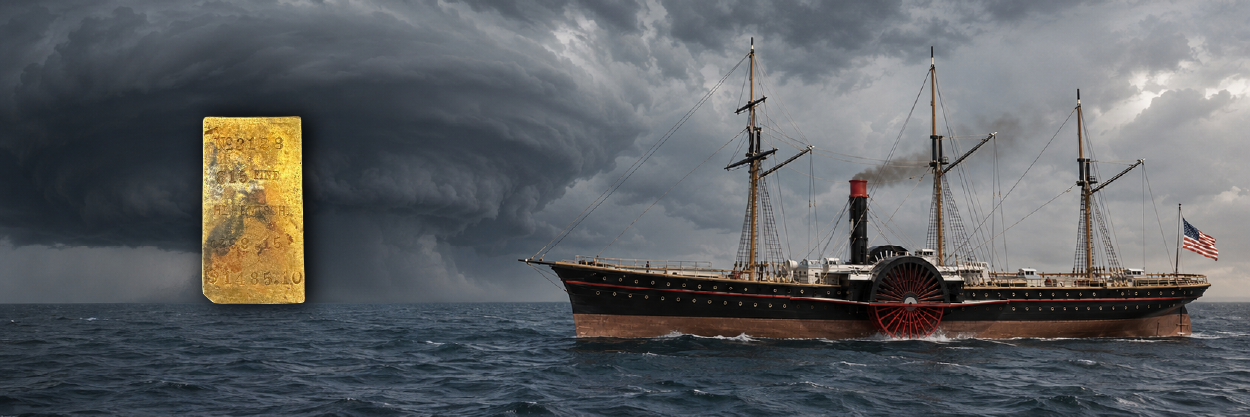
The exhibit included recovered coins, passenger belongings, artifacts, photographs, and material connected to one of the most famous shipwrecks in American history. But one item immediately got our attention: an actual gold bar recovered from the wreck.

Gold bar recovered from the S.S. Central America shown with the legendary Ship of Gold during the 2026 ANA World’s Fair of Money.

The S.S. Central America, later known as the “Ship of Gold,” sank in a hurricane on September 12, 1857, while transporting an enormous quantity of California Gold Rush treasure toward the East Coast. The wreck eventually came to rest approximately 7,200 feet beneath the Atlantic Ocean, where it remained for more than a century before being discovered.


There is something very different about reading about shipwreck treasure and standing a few feet away from gold that actually went down with the ship. Suddenly, the story becomes much more tangible.


The gold bar was only the beginning for us. As we moved through the show, we encountered actual S.S. Central America coins in dealer inventories, took photographs, started asking questions, and quickly realized there was much more to this story than the famous gold recovered from the wreck.


There are the passengers and their belongings, the treasure, the recovery expeditions, the coins carried aboard the ship, and the remarkable snapshot those coins provide of American commerce during a period when the country’s monetary system was changing dramatically.

We are deliberately stopping there.


The S.S. Central America deserves far more than a few paragraphs in a Top 5 article, so we are giving it its own CoinCollecting.com blog series. We came home with plenty of original photographs, stories to follow, and questions we want to explore.


Read our Blog Series on the S. S. Central America and learn more about all the gold they found HERE 👉 Coming Soon!!


ELEVEN 1933 SAINT-GAUDENS DOUBLE EAGLES


Our Number 1 really was not much of a contest.


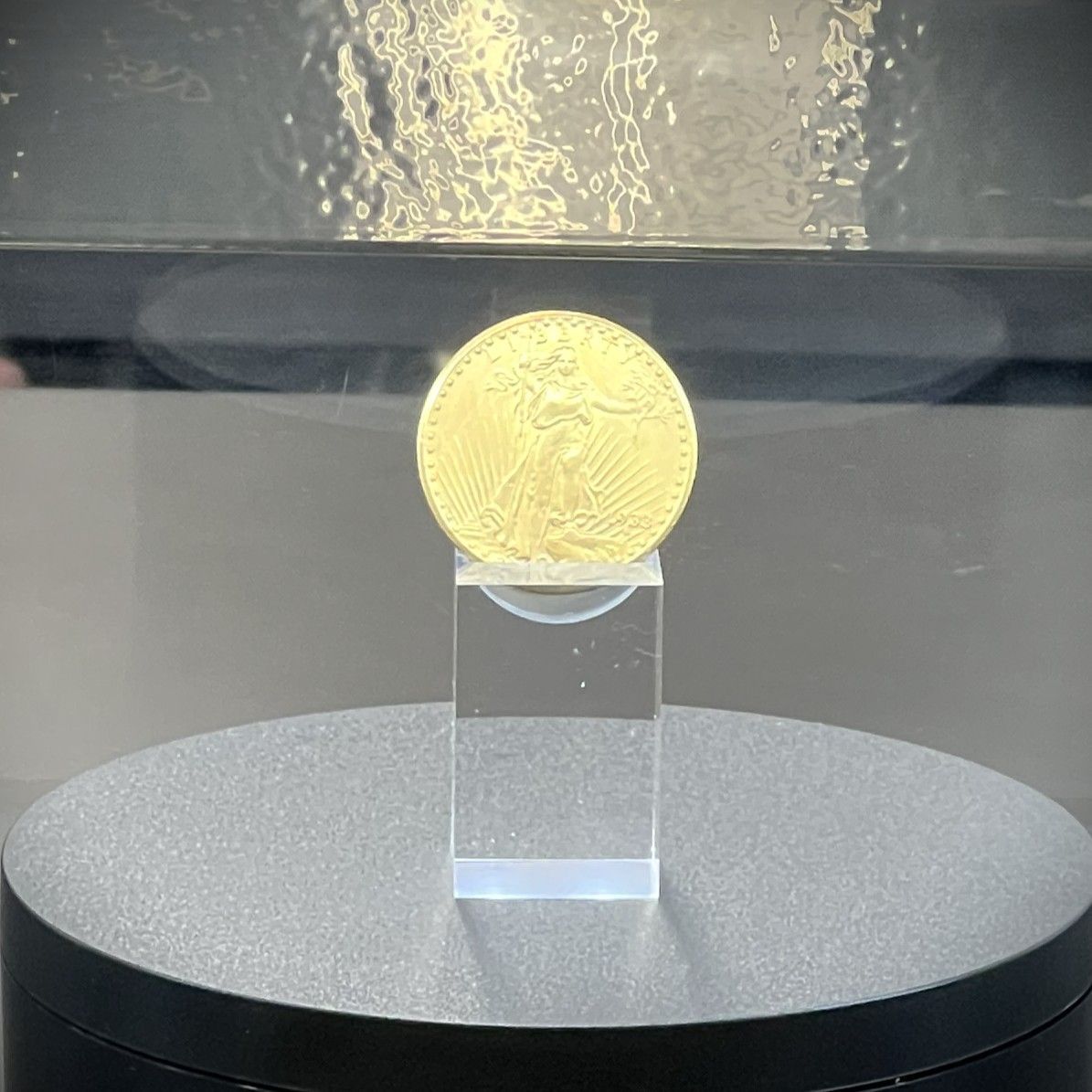
At the World’s Fair of Money, all 11 government-owned 1933 Saint-Gaudens Double Eagles were assembled together for the first time. Seeing one 1933 Double Eagle would be memorable. Seeing eleven of them sitting together in one display was something entirely different.

1933 Saint-Gaudens Double Eagle displayed at the 2026 ANA World’s Fair of Money in Pittsburgh.

These coins are not simply rare pieces of American gold. They sit at the center of one of the strangest and most fascinating stories in American numismatics, involving changing federal gold policy, coins that were never officially released for circulation, Secret Service investigations, international intrigue, lawsuits, and decades of questions over legal ownership.


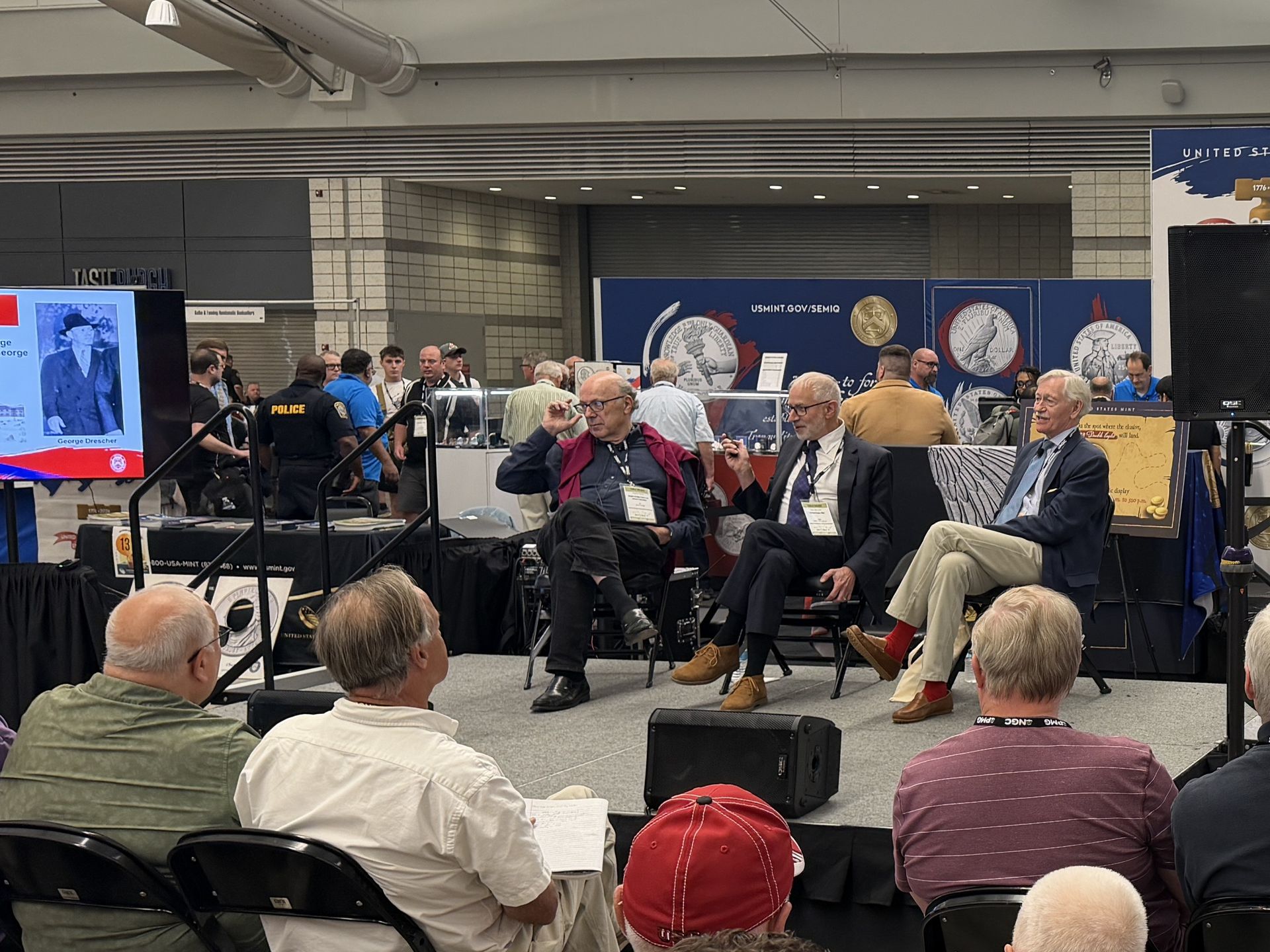
The display alone would have been enough to make our list, but what made this our clear Number 1 was the presentation The Extraordinary Case of the 1933 Double Eagle $20 Gold Coins, featuring U.S. Mint Acting Chief Counsel Greg Weinman, numismatic author and researcher David Tripp, and British rare-coin dealer Stephen Fenton. (presented by the US Mint)


All three men have deep connections to the 1933 Double Eagle story, but each brought a distinctly different perspective.


Greg Weinman offered the U.S. Mint and legal side of the story. He has been involved for decades with legal matters surrounding the 1933 Double Eagles and helped explain how the government approached the complicated ownership issues that followed these coins.


David Tripp brought the historian and researcher’s perspective. A former director of Sotheby’s Coin Department and author of Illegal Tender: Gold, Greed, and the Mystery of the Lost 1933 Double Eagle, Tripp spent years researching the people, records, and events behind the saga.


Stephen Fenton brought something different again because he was not simply studying the story from the outside. He was part of it.


Fenton handled the famous 1933 Double Eagle once owned by King Farouk of Egypt. When that coin resurfaced in New York in 1996, it was seized by U.S. Secret Service agents during an attempted sale, beginning a lengthy legal fight over whether Fenton or the United States government had the right to own it.


The case eventually ended in an unusual settlement. The coin was returned to the United States Mint, formally monetized, and authorized for private ownership before being sold at public auction in 2002. That specimen occupies a unique position in the story of the 1933 Double Eagles as the one example authorized for private ownership and public auction.

That is what made the presentation so compelling. Weinman could explain the government and legal perspective. Tripp could bring years of historical research to the story. Fenton could describe events he had personally experienced.


They were not three people repeating the same history. They were telling one extraordinary numismatic story from three very different directions.

After listening to them, we could walk back onto the show floor and look at eleven 1933 Double Eagles sitting together in one case. The history we had read about for years suddenly felt considerably more real.


That combination—the coins themselves and the opportunity to hear the story from three men so closely connected to it—is what made this our Number 1 moment from Pittsburgh.


Why These Five Stuck With Us

Only after putting the list together did we notice how neatly these five moments trace a path through American history.


The Declaration takes us back to 1776 and the founding of the country. The legendary 1804 dollar represents the early years of American coinage and one of the hobby’s greatest numismatic stories. The S.S. Central America takes us to 1857, the California Gold Rush, and a period of enormous change in American commerce and money. The 1933 Double Eagle captures one of the most unusual chapters in the history of American gold coinage, while the new 2026 issues bring us back to the present as the United States marks its 250th anniversary.


That is nearly 250 years of American history intersecting during a few days at one coin show.


And perhaps that is the best explanation for why a show like the ANA World’s Fair of Money still matters. Of course, collectors go to see extraordinary coins, meet dealers, buy and sell, learn, and hunt for the next piece for their collections. But the best moments often go beyond the coins themselves.


In Pittsburgh, we stood in front of historic documents, held a newly released U.S. coin, looked at gold recovered from the bottom of the Atlantic, and listened to people personally connected to one of the most famous stories in numismatics explain how it unfolded.


You may go to a coin show looking for coins, but sometimes you come home with stories.