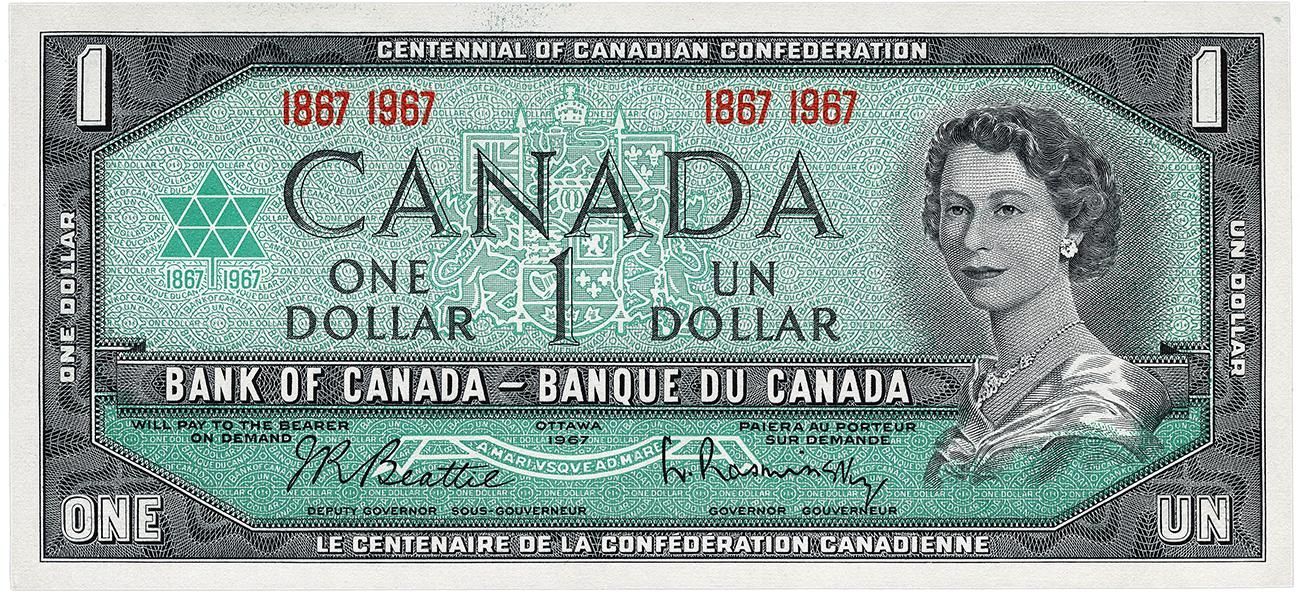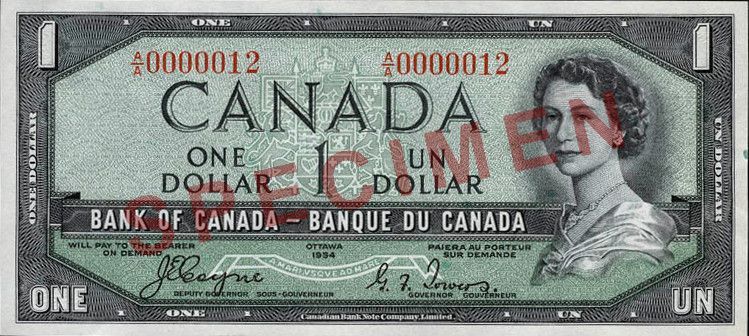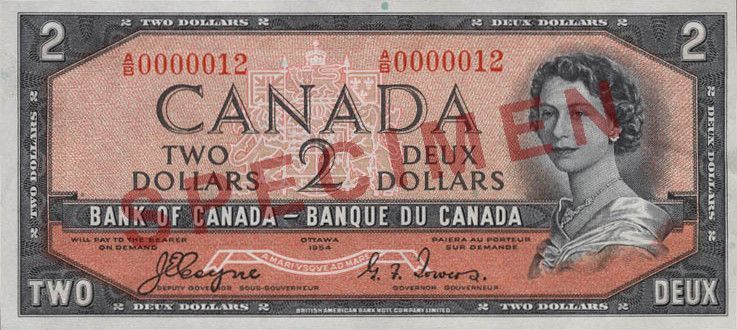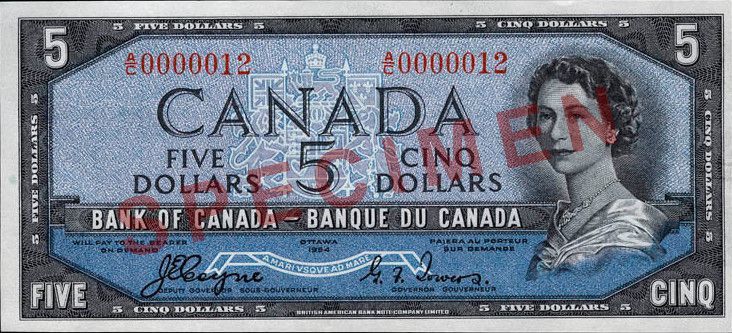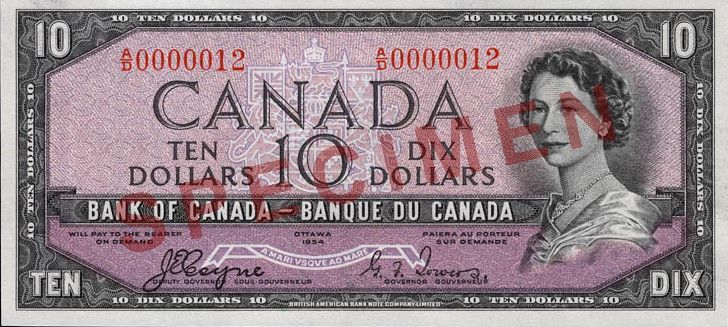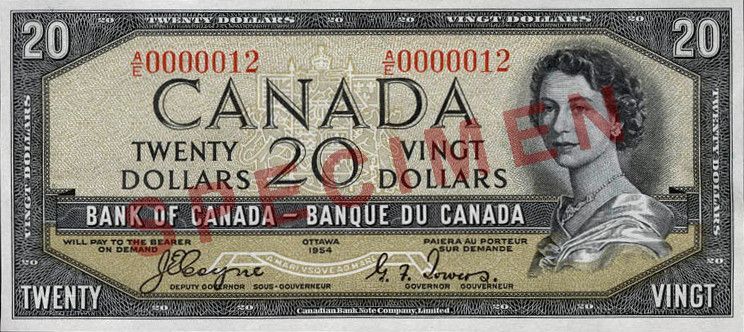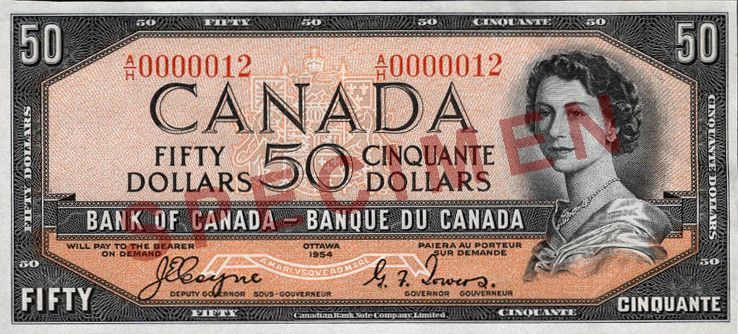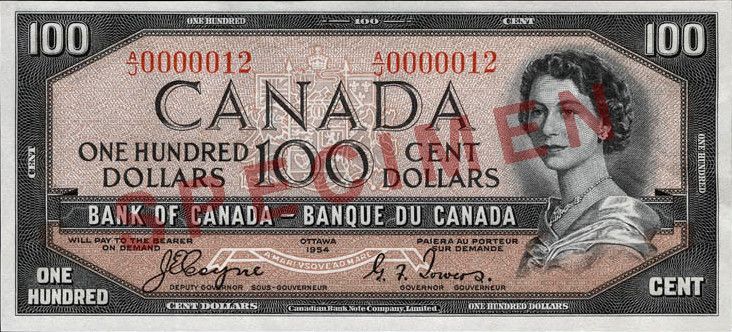
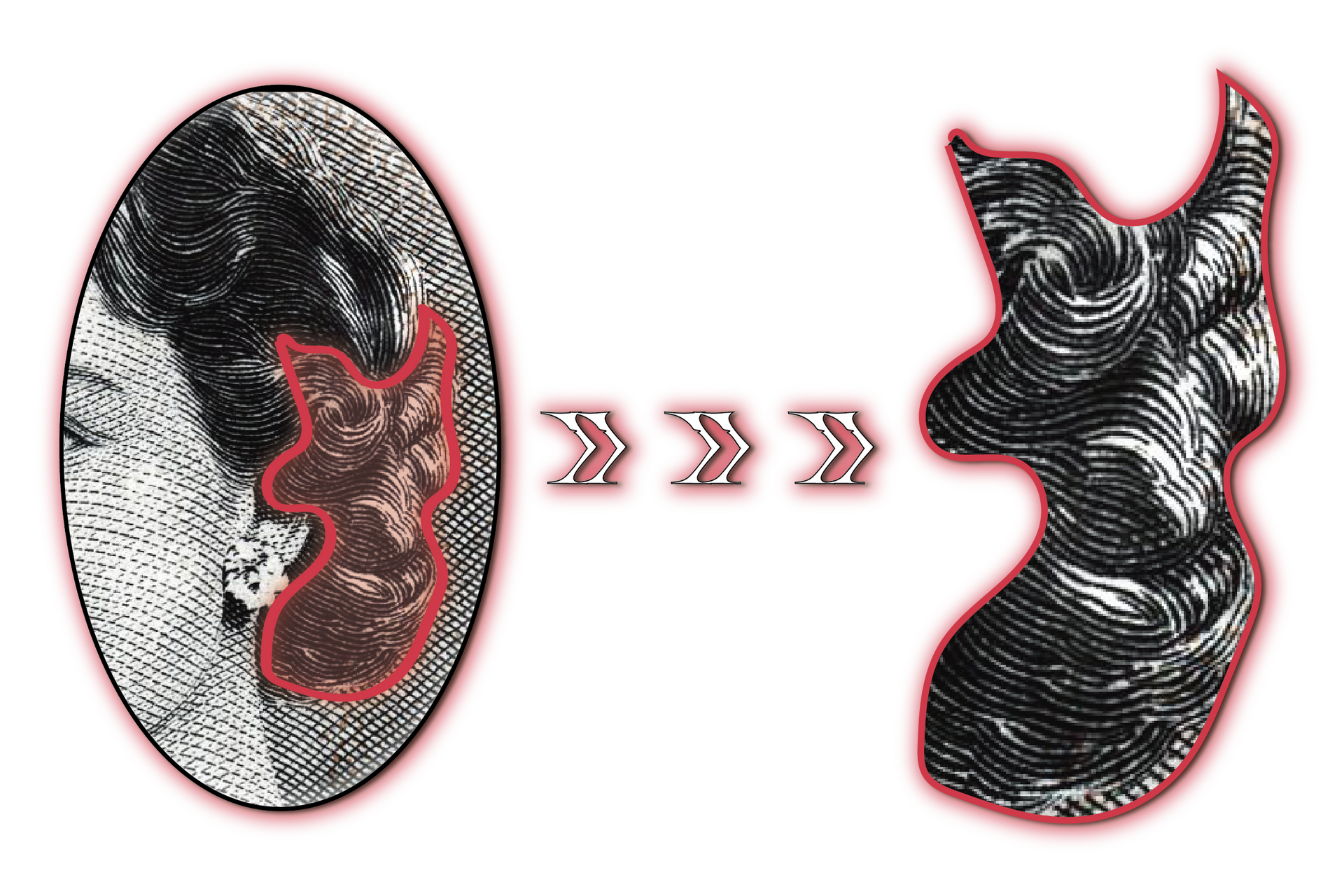
The alleged “Devil’s Face” appears in the earliest printings of the 1954 Canadian banknote series, designed by British portrait engraver Dorothy Wilding and adapted by the Canadian Bank Note Company. The problem lay in the Queen’s hair — or rather, in the shadows between its curls.
Under certain lighting, those shadows seemed to form the contours of a sinister face: eyes, nose, and a grinning mouth. Some saw the image as pure coincidence, a quirk of detailed intaglio engraving; others whispered of hidden meanings or mischievous engravers.
Public reaction grew intense enough that officials quietly commissioned a Modified Portrait. The new version softened the dark lines, removing the illusion while keeping the regal profile intact. Both varieties circulated, and thus a legend — and a collector’s quest — was born.
Today, the Devil’s Face banknotes stand as a modern reminder that even the most official art can invite superstition, and that our eyes often see what our fears suggest.