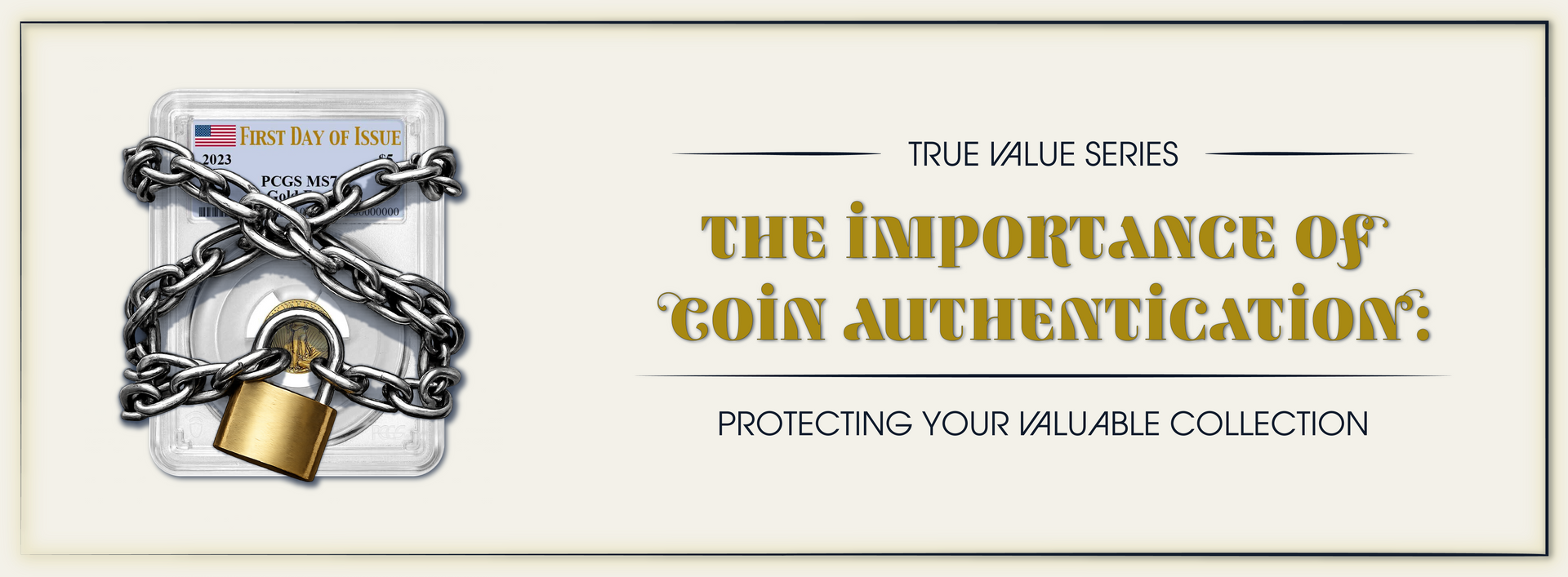
A Coin Is Only as Strong as Its Credibility
A coin can be rare. It can be historic. It can even be beautiful.
But without credible authentication, none of that is fully recognized in the marketplace
Because value in numismatics is not just about what a coin is, but about what the market is willing to trust — and that trust is earned through authentication and certification.
Authentication Creates Liquidity
At its core, authentication is not about labels. It’s about movement.
When a coin is verified and certified by a recognized third-party grading service, something important happens:
- Buyers gain confidence
- Dealers move faster
- Auction houses accept the coin without hesitation
- Transactions become more efficient
The coin becomes easier to buy. Easier to sell. Easier to understand.
In simple terms: The less uncertainty there is, the more freely a coin can move through the market.
And in any market, liquidity matters.
Price Stability and Marketability
Two coins can look nearly identical: Same date. Same type. Same general condition. But if one is certified and the other is not, the difference becomes clear the moment a transaction begins.
The certified coin often:
- sells faster
- attracts stronger offers
- faces less negotiation
⭐Why? Because documentation reduces doubt and in a competitive market, reduced doubt translates directly into stronger pricing. This doesn’t mean certification creates value out of thin air. It means: Certification makes value easier for the market to recognize — and agree on.
Protection Beyond the Purchase
Authentication doesn’t just matter when you buy a coin. It matters when you own it. And it matters even more when it changes hands.
For collectors thinking long-term — whether that means resale, passing down a collection, or simply preserving value — certification provides clarity that outlasts the original owner.
A certified coin:
- communicates condition without explanation
- reduces the risk of misinterpretation
- and removes guesswork for the next person handling it
Because not every heir is a collector. But every collection eventually becomes someone else’s responsibility.
When Certification Makes Sense
Not every coin needs to be graded. That’s an important point — and one worth repeating. But there are moments when certification becomes more than helpful. It becomes necessary.
You should strongly consider it when:
- the coin is high grade
- the issue is scarce or widely collected
- the value is meaningful
- resale is likely
- or long-term protection matters
⭐ In these cases, authentication isn’t about presentation. It’s about defensibility. It gives your coin a position the market can recognize — and stand behind.
A Shift in Perspective
At some point, every collector reaches a turning point.
The focus moves from: “What is this coin? ➡️ “How will this coin be understood by someone else?”
That shift is where authentication becomes essential. Because collecting is personal — but the market is not. And eventually, every coin is evaluated by someone who wasn’t there when you acquired it.
In numismatics, true value rests on three pillars:
1️⃣ Condition.
2️⃣ Authenticity.
3️⃣ Market trust.
Condition tells you what the coin is, while authentication confirms it and allows the market to respond with confidence. When those elements are aligned, value becomes clearer and more resilient over time. Collectors who understand this aren’t just building collections — they’re building credibility, which in a market driven by trust may be the most valuable asset of all.