
When most people pick up a coin, the first question is simple: What is this worth?
But before you can answer that, you need to understand what you’re actually looking at — and how well it has been preserved. That’s where many beginners get stuck. Grading can feel complicated, but it doesn’t have to be.
All you need is a simple way to work through the coin in front of you.
This guide walks you through six straightforward questions — the same ones collectors use every day. It’s not about getting the grade perfect. It’s about learning how to look at a coin and make better decisions with confidence.


What is this coin?
Before you worry about grade…
Before you think about value…
Start here:
What exactly is this coin?
This is the step that makes everything else easier — and more accurate.
Start With the Big Picture
What country is it from?
This is the first clue.
- U.S. coins will often say “United States of America”
- British coins may say “Elizabeth II” or “Charles III”
- European coins may show Euro symbols or country names
- Older world coins may require a little more digging
If you’re not sure 👉 use references like:
- Your CoinCollecting.com U.S. overview:
http://www.coincollecting.com/US-coin-overview - The U.S. Mint website:
https://www.usmint.gov/ - Or your
Global Treasures series for world coins:
http://www.coincollecting.com/global-treasures-world-money-series
You don’t need to know everything right away.
You just need to get in the right neighborhood.
What type of coin is it?
Now narrow it down:
- Morgan Dollar
- Wheat Penny
- American Eagle
- Sovereign
- Euro
- Commemorative coin
Coins are grouped by design and series, not just by size or metal.
This matters because different types:
- have different values
- have different grading expectations
- and are collected differently
Now Look at the Details
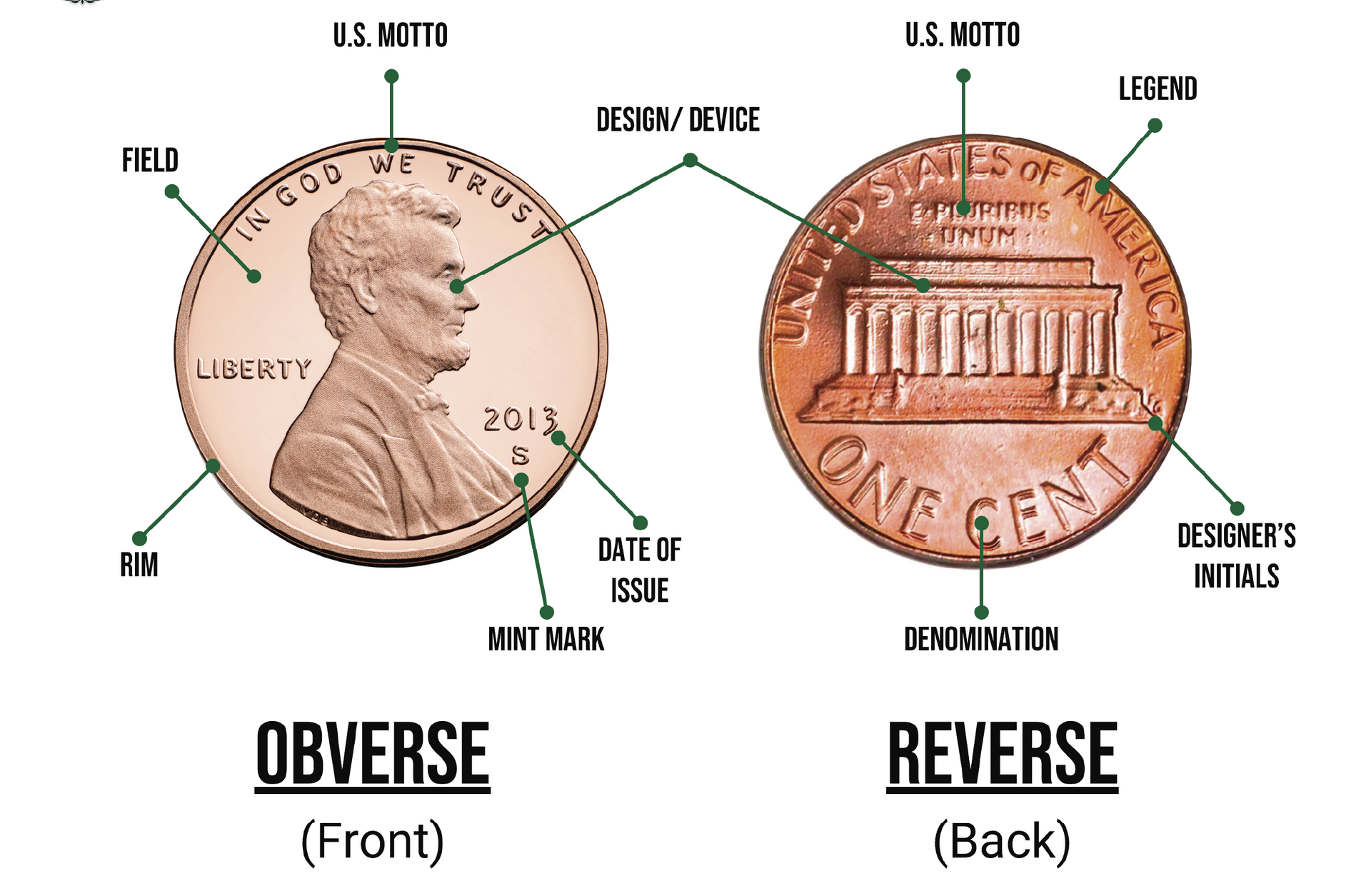
What is the denomination?
Look for the face value:
- 1 cent
- 5 cents
- $1
- £1
- 1 ounce
This tells you what the coin was intended to represent — even if its collector value is now much higher.
What is the date?
Find the year. This is one of the most important pieces of information on the coin.
Two coins that look identical can have very different values based on date alone.
Is there a mint mark?
Look closely for a small letter, usually near the date:
- D = Denver
- S = San Francisco
- P = Philadelphia
Not all coins have one — but when they do, it matters.
👉 You can learn more here: http://www.coincollecting.com/complete-guide-to-us-mint-marks
One More Question to Ask
Was this made for circulation — or for collectors? Not every coin was meant to be used as money.
You may be holding:
- A circulating coin (used in everyday transactions)
- A commemorative coin (made for collectors)
- A bullion coin (valued for metal content)
- A medal or token (not legal tender at all)
This affects how the coin is graded — and how it is valued.
Why This Step Matters
At first glance, many coins look similar.
But small details — the country, type, date, and mint mark — can completely change what you’re holding.
Before you ever think about grading, you need to answer:
- What is it?
- Where is it from?
- What was it made for?
Because grading only makes sense after you understand the coin itself.
| Term | Definition |
|---|---|
| Commemorative | A coin made to honor something, usually for collectors. |
| Denomination | The face value of the coin |
| Legal Tender | A coin intended for use of money. |
| Mint Mark | A symbol on the coin indicating where the coin was made |
| Type | The design or series of coin. |
Is it real?
Once you know what the coin is, the next question is just as important:
Is this coin actually genuine?
Most coins you come across will be real.
But mistakes happen — and counterfeit coins are more common than many beginners realize, especially with older silver, gold, and popular collector pieces.
The goal here is not to turn you into an expert authenticator. It’s to give you a few simple checks that help you spot obvious problems before you go any further.
Start With a Quick Visual Check
Before you grab any tools, just look at the coin.
Ask yourself:
- Does it look like the examples you see online?
- Are the details sharp — or do they look soft or “off”?
- Does anything feel unusual about the design, lettering, or spacing?
If something immediately feels wrong, trust that instinct.
Check the Weight
This is one of the easiest and most useful checks.
Use a small digital scale and compare the coin to known specifications.
Ask:
- Is the weight close to what it should be?
- Is it noticeably heavier or lighter?
Even small differences can matter.
Try a Magnet (Simple but Helpful)
Most U.S. coins made of silver or gold are not magnetic.
- If a coin sticks strongly to a magnet → that’s a red flag
- If it doesn’t react → that’s a good sign (but not proof)
This is a quick filter — not a final answer.
Look at the Edge
Turn the coin and inspect the edge.
Check for:
- Uneven grooves (reeding)
- Filing marks
- Rough or inconsistent edges
The edge is often where problems show up first.
Compare to a Known Example
Pull up a clear image of the same coin online.
Look side by side:
- Do the details match?
- Does the lettering look the same?
- Are the proportions correct?
This is one of the most underrated steps.
Trust the Feel
This is harder to explain, but important.
Ask yourself:
- Does the coin feel right in hand?
- Does it look natural — or slightly off?
Experienced collectors rely on this more than beginners, but it’s a habit worth building early.
When to Stop and Ask for Help
If anything raises a question — even a small one — don’t guess.
That’s the moment to step back.
Take it to:
- a coin dealer
- a coin show
- or a professional grading service
Because when it comes to authenticity, certainty matters more than speed.
The Goal of This Step
You’re not trying to prove a coin is perfect. You’re simply asking:
“Does this pass a basic reality check?”
If it does, move on.
If it doesn’t — or you’re unsure — that’s your signal to get a second opinion.
| Term | Definition |
|---|---|
| Authenticity | Whether the coin is genuine. |
| Counterfeit | A coin made to imitate a real one. |
| Specifications | The correct weight, size, and metal for that coin. |
Has it been used?
Now that you know what the coin is — and you’ve done a quick reality check to make sure it’s genuine — you’re ready for the question that really starts to shape value:
Has this coin actually been used?
This is where grading begins.
Not with numbers.
Not with labels.
Just a simple distinction:
👉 Was this coin used in everyday transactions — or not?
Start With the High Points
The easiest place to see this is on the highest parts of the design.
Every coin has areas that stick up more than the rest. These are called the high points, and they are the first places to wear down over time.
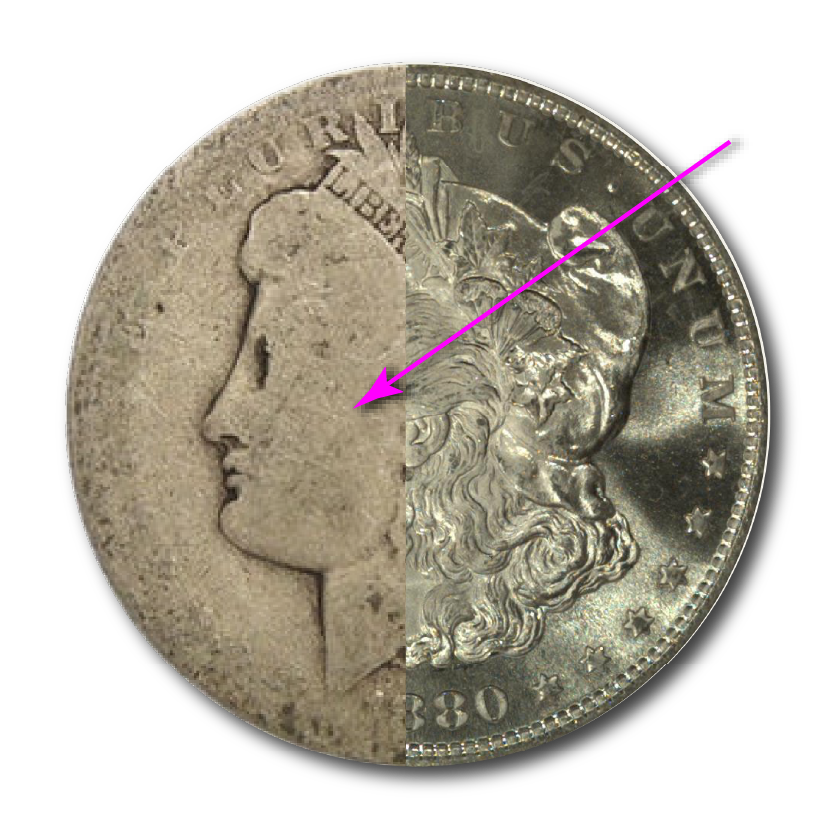
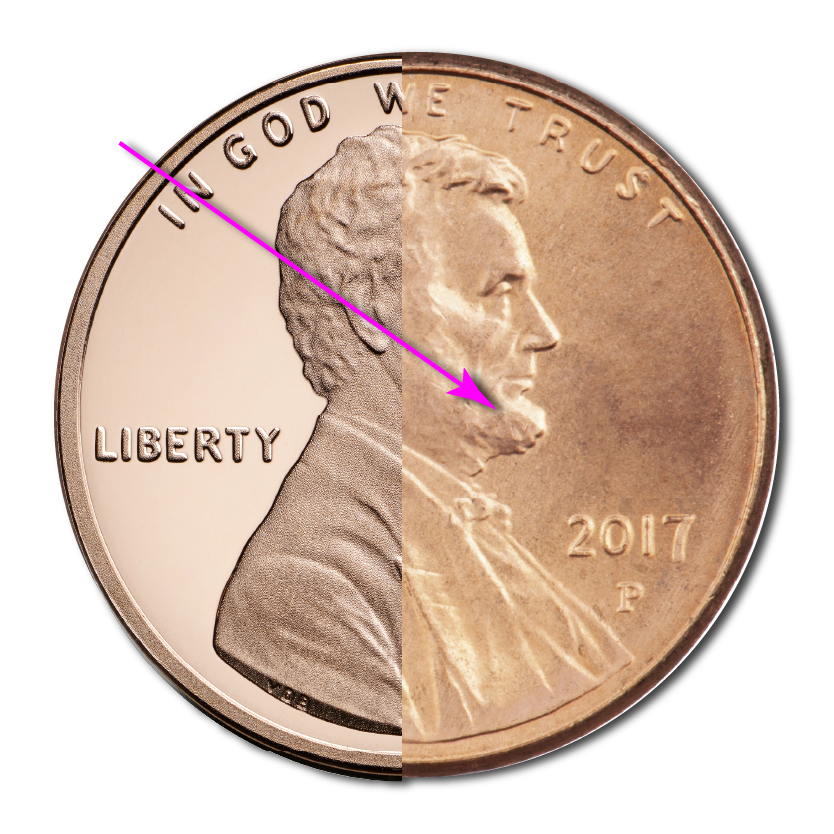
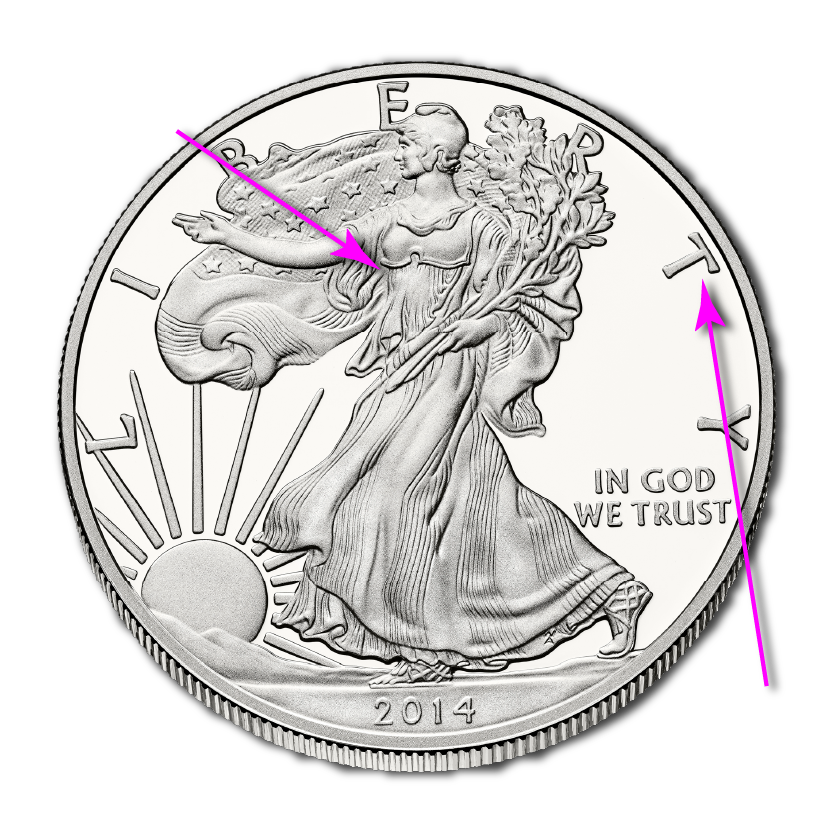
Take a moment and look closely.
- Do those areas still look sharp?
- Or do they look smooth, flattened, or slightly rubbed down?
If they look worn, even just a little, that’s your answer-- The coin has circulated.
Look at the Coin as a Whole
Now step back and take in the entire coin.
- Circulated coins tend to lose their sharpness over time. Details that should stand out start to blend together. Edges soften. The design loses some of its depth.
- An uncirculated coin, on the other hand, will still look crisp. Even if it has marks or imperfections, the original detail is still there.
- This is where beginners sometimes get tripped up.
- A coin can look “nice” and still have wear.
- And a coin can look a little rough — but still be uncirculated.
That’s why you don’t focus on how pretty it is. You focus on whether the design has been worn down.
Watch for Subtle Wear
As you look at better-quality coins, the difference becomes more subtle. You might not see obvious flattening.
Instead, look for:
- slight dullness on raised areas
- a break in the texture of the metal
- areas that don’t reflect light the same way
These are small clues — but they matter. Because even light wear changes how a coin is classified.
A Simple Way to Think About It
If you’re unsure, don’t overcomplicate it.
Just ask:
Does this coin look like it’s been handled and used… or carefully stored and preserved?
That one question will take you a long way. You’re not trying to assign a grade yet. You’re just deciding which side of the line the coin falls on:
👉 Circulated or uncirculated
Why This Step Matters:
🪙 Wear determines the category- Once a coin shows wear, it is no longer Mint State.
💰 Value doesn’t disappear- A circulated coin can still be valuable — sometimes very valuable.
📊 But value is evaluated differently- Circulated and uncirculated coins are priced and compared in different ways.
🎯 This is your first big decision point- You’re not grading yet — you’re simply deciding which category the coin belongs in.
| Term | Definition |
|---|---|
| Circulated | A coin that has been used in everyday transactions. |
| High Points | The raised area(s) of the coin that wear down first. |
| Uncirculated | A coin that has not been used as currency and shows nosigns of wear from use. |
| Wear | Loss of detail caused by handling or circluation. |
Does it still have its original shine?
Once you’ve checked for wear, the next question is simple:
Does the coin still have its original shine?
That shine is called luster — and it’s one of the clearest signs of how well a coin has been preserved.
TILT THE COIN UNDER LIGHT
- Hold the coin and gently tilt it back and forth under a light.
- Watch how the light moves across the surface.
Ask yourself:
- Does the coin look bright and lively?
- Does the light move smoothly across it?
- Or does it look dull and flat?
You’re not looking for perfection — just whether the coin still has energy to it.
LOOK FOR THE “CARTWHEEL” EFFECT
On many coins — especially silver — you’ll notice something interesting. As you tilt the coin, a band of light seems to rotate across the surface. Collectors call this the cartwheel effect.
👉 It’s one of the best signs that the coin still has its original surface.
WATCH FOR BROKEN OR DULL SHINE
Now look a little closer. If the shine looks:
- patchy
- muted
- uneven
That can be a sign of:
- wear
- cleaning
- or surface damage
Even if the coin still looks “nice,” this is where you start to see the difference between average and well-preserved.
A SIMPLE WAY TO THINK ABOUT IT
Don’t overthink it.
Just ask:
Does this coin still look alive — or does it look tired?
✨ Coins with strong luster tend to feel vibrant.
🕳️ Coins without it often look flat or worn down.
| Term | Definition |
|---|---|
| Cartwheel Effect | A rotatating band of light seen when tilting a coin. |
| Luster | The original shine created when a coin is struck. |
Does the surface look damaged?
Now that you’ve looked at wear and shine, it’s time to focus on the surfaces. Take a step back and look at the coin as a whole.
Does anything look damaged, scratched, or off?
You’re not looking for tiny flaws yet — just the overall condition of the surfaces.
LOOK FOR OBVIOUS MARKS FIRST
Start with what’s easy to see. Check for:
- scratches
- dents or nicks
- spots or discoloration
Then ask:
- Are these light… or do they stand out right away?
- Are they in important areas like the face or center?
Marks in noticeable areas matter more than marks near the edges.
WATCH FOR SIGNS OF CLEANING
This is one of the most common issues beginners run into. A coin might look bright — but not in a good way.
Look for:
- unnatural shine
- fine, hairline scratches
- a wiped or polished appearance
Cleaning can remove the coin’s original surface — and that usually lowers value.
LOOK AT THE COIN AS A WHOLE
Now zoom out again.
👉 Does the coin look natural — or does something feel off?
Two coins can be very similar in condition, but one may stand out simply because it looks better overall.
That’s called eye appeal, and it matters more than many beginners expect.
A SIMPLE WAY TO THINK ABOUT IT
Ask yourself: Does this coin look original… or does it look altered or damaged?
You don’t need to be perfect here.
You’re just learning to notice the difference.
| Term | Definition |
|---|---|
| Eye Appeal | How attractive the coin looks overall. |
| Hairlines | Fine scratches, often caused by cleaning. |
| Surface Damage | Scratches, dents, or marks that affect the coin. |
| Original Surface | A coin that has not been cleaned or altered. |
Does the edge look right?
This is one of the simplest steps — and one of the most overlooked. Turn the coin sideways and take a look at the edge.
Does everything look normal for this coin?
START WITH THE RIM
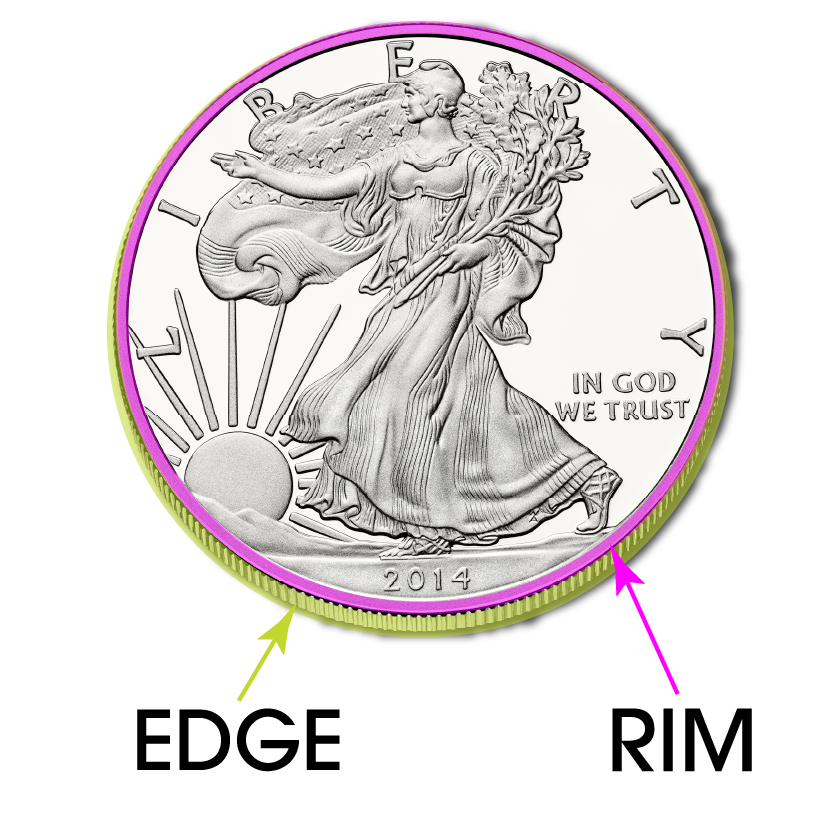
The rim is the outer border on the front and back of the coin. Check for:
- dents
- flat spots
- uneven edges
These are easy to see — and they matter.
LOOK AT THE EDGE ITSELF
Now focus on the side of the coin. Depending on the coin, you might see:
- grooves (called reeding)
- a smooth edge
- or even lettering
Ask yourself:
- Does it look even and consistent?
- Does anything look damaged or out of place?
WATCH FOR SIGNS OF TAMPERING
This is where you can sometimes catch problems quickly. Look for:
- filing marks
- uneven grooves
- rough or altered edges
If something looks off here, it’s worth taking a closer look before moving on.
A SIMPLE WAY TO THINK ABOUT IT
Don’t overthink it. Just ask: Does this look like it’s supposed to?
✅If yes — move on.
❌If not — pause and take a closer look.
| Term | Definition |
|---|---|
| Edge | The side of the coin. |
| Reeding | The grooves alog the edge of some coins. |
| Rim | The raised outer border of the surface of the coin. |
By now, you’ve walked through the same basic process experienced collectors use every day. Before worrying about grades or value, you simply ask a few straightforward questions:
- What is this coin?
- Is this coin real?
- Has this coin circulated?
- Does this coin still shine?
- Does the coin look damaged?
- Does the edge look right?
That’s it. You don’t need to have all the answers right away. You just need to slow down, look closely, and work through each step.
And if anything doesn’t feel right — or you’re unsure at any point — that’s your signal to take the next step.
👉 Consider professional grading
👉 Or bring the coin to a trusted dealer